
Roman Travertine: The Natural Stone that Built Rome

The natural stone that shaped the architecture of Rome for over two thousand years.
Roman Travertine is one of the most recognizable natural stones in architectural history. Extracted from the geological basin surrounding Rome, particularly in the Tivoli area, this limestone has been used for more than two thousand years in monuments, public spaces and buildings that still define the visual identity of the city. Its presence in Roman architecture is so widespread that the material itself has become inseparable from the history and image of Rome.
Travertine forms through a natural geological process in which mineral-rich waters deposit layers of calcium carbonate over long periods of time. These deposits slowly solidify and create a limestone characterized by porous structures, layered patterns and warm natural tones. The interaction between mineral water, geological activity and time produces a material with a distinctive texture and structural behavior that differs from many other natural stones used in architecture.
The stone’s durability is one of the main reasons it has remained in continuous use from antiquity to modern architecture. Roman Travertine naturally resists frost, heat, water and environmental exposure while maintaining its structural stability. Many monuments built during the Roman Empire, including some of the most famous structures in the world, demonstrate how this material can endure centuries of weather conditions while preserving its architectural presence.
Beyond its technical performance, Roman Travertine also holds a strong cultural and architectural significance. From ancient Roman engineering to Renaissance and contemporary design, architects have continued to select this stone for projects that require both durability and aesthetic character. Its natural color variations, subtle textures and ability to age gracefully allow the material to integrate into a wide range of architectural environments.
Today Roman Travertine continues to be used in residential, commercial and landscape architecture. Floors, wall cladding, terraces, staircases and architectural elements made from this stone maintain a connection with the long tradition of Roman construction while adapting to contemporary design approaches. Understanding the geological origin, properties and architectural uses of Roman Travertine helps explain why it remains one of the most appreciated natural stones in architecture.
Why Roman Travertine is unique
Roman Travertine is much more than a simple natural stone. Its origin in the geological basin of Rome, its millennial history and its resistance to weather conditions make it one of the most recognizable materials in European architecture.
-
Roman origin; Roman Travertine has been used since ancient Rome in monuments, temples and public buildings, becoming one of the defining materials of Roman architecture.
-
Unique natural structure: The stone is characterized by natural pores and layered formations created during its geological formation over thousands of years.
-
Recognizable character: Roman Travertine has a distinctive appearance that combines warm tones, natural textures and subtle variations that make each piece unique.
-
Natural durability: This stone naturally resists frost, heat, water and pollution, which is why it has been used outdoors for centuries.
-
A stone that ages beautifully: Unlike many modern materials, Roman Travertine develops a natural patina over time, giving the stone even more character.
-
Architectural versatility: Roman Travertine can be used for floors, wall cladding, stairs, terraces, pools and architectural elements in both classic and contemporary projects.
-
Connection with Italian heritage: The stone is closely linked to the architectural heritage of Rome and remains one of the most representative natural materials of Italian architecture.
-
Natural material: Travertine is a natural limestone formed through mineral deposits in thermal waters over thousands of years.
-
Wide range of finishes: Different finishes and cuts allow Roman Travertine to adapt to many architectural styles and design needs.
-
A stone used for centuries: The continued presence of Roman Travertine in historic monuments demonstrates its durability and long-term stability.
Discover how Roman Travertine can enhance contemporary architectural projects with its natural character and long-lasting durability.
The history of Roman Travertine

Roman Travertine is a natural limestone formed through the precipitation of calcium carbonate in mineral waters.
Its geological formation is closely linked to the area surrounding Rome, particularly the Tivoli basin where this stone has been extracted for centuries.
Since ancient Roman times, travertine has been used to build some of the most iconic monuments of the city.
The Colosseum, one of the most recognizable structures in the world, was built largely using Roman Travertine.
Other important examples include the Theatre of Marcellus, St. Peter’s Basilica and many historic fountains and squares across Rome.
During the Renaissance and Baroque periods, architects and artists such as Michelangelo and Bernini continued to use this stone in major architectural works.
Its natural structure, warm tones and durability made it particularly suitable for monumental architecture and public spaces.
Roman Travertine combines a strong historical identity with remarkable resistance to weather conditions.
For centuries it has been used outdoors because it naturally withstands frost, heat, water and pollution while maintaining its structure and appearance.
Even today Roman Travertine remains closely connected to the architectural identity of Rome.
Its presence in monuments that have stood for centuries clearly demonstrates the durability and long-term stability of this natural stone.

How Roman Travertine is formed
Roman Travertine forms through a natural geological process in which mineral-rich waters deposit layers of calcium carbonate over long periods of time.
In the Tivoli–Rome basin, thermal waters rich in minerals slowly created these deposits. As the layers accumulated over thousands of years, they gradually solidified into the natural limestone known as travertine.
This slow formation process gives Roman Travertine its characteristic porous structure, layered patterns and warm natural tones. Each block reflects the geological interaction between water, minerals and time.
From ancient Rome to contemporary architecture
Over the centuries Roman Travertine has continued to play an important role in architecture.
From ancient monuments to Renaissance palaces and modern buildings, the stone has remained a constant element of Italian architectural tradition.
Today it is widely used for floors, wall cladding, stairs, terraces and architectural elements in residential and contemporary projects.
Its durability, natural appearance and historical connection to Rome make it a distinctive material for both classic and modern designs.

Experience and craftsmanship in Roman Travertine
Travertino Romano is a group of companies specialized in the extraction, processing and supply of Roman Travertine and natural stone products.
Since 1968 we have combined traditional craftsmanship with modern production techniques, working with this stone directly in the area surrounding Rome. Our experience allows us to supply materials for residential projects, architectural applications and custom stone elements.
Over the decades we have developed a deep knowledge of Roman Travertine, from the selection of blocks to the preparation of finished elements for architectural use. This experience allows us to guide clients, architects and designers in choosing the most suitable type of stone, finishes and cuts for their projects.
We work mainly with private clients, architects and designers looking for authentic Roman Travertine for floors, wall cladding, stairs, terraces and architectural details.
Our work follows the entire process, from stone selection and cutting to the preparation of finished elements such as tiles, slabs, steps, pool edges and custom stone pieces.
Materials are prepared at our yard and made available for collection, allowing clients and transporters to organize pickup directly from the source.
This direct approach helps maintain quality control while offering clients access to authentic Roman Travertine prepared for their specific architectural projects.
Roman Travertine is not used only for traditional floors and wall coverings.
Because of its durability, natural character and warm tones, it can be applied in many architectural and design elements for both interior and exterior spaces.
In residential projects it is frequently chosen for floors, wall cladding, stairs, terraces and pool edges.
Its natural texture and warm color variations allow the stone to integrate naturally with both classic and contemporary architecture.
Roman Travertine is also used for architectural details such as window sills, steps, coping stones, garden walls and outdoor paving.
These applications allow the stone to interact with natural light and surrounding landscapes while maintaining a strong architectural presence.
In interior design it can also be used for custom elements such as tables, bathroom surfaces, shower trays, kitchen tops and decorative wall panels.
Each piece reflects the natural structure of the stone, creating spaces where material authenticity and design coexist in balance.

Experience and craftsmanship in Roman Travertine
Travertino Romano is a group of companies specialized in the extraction, processing and supply of Roman Travertine and natural stone products.
Since 1968 we have combined traditional craftsmanship with modern production techniques, working with this stone directly in the area surrounding Rome. Our experience allows us to supply materials for residential projects, architectural applications and custom stone elements.
Over the decades we have developed a deep knowledge of Roman Travertine, from the selection of blocks to the preparation of finished elements for architectural use. This experience allows us to guide clients, architects and designers in choosing the most suitable type of stone, finishes and cuts for their projects.
We work mainly with private clients, architects and designers looking for authentic Roman Travertine for floors, wall cladding, stairs, terraces and architectural details.
Our work follows the entire process, from stone selection and cutting to the preparation of finished elements such as tiles, slabs, steps, pool edges and custom stone pieces.
Materials are prepared at our yard and made available for collection, allowing clients and transporters to organize pickup directly from the source.
This direct approach helps maintain quality control while offering clients access to authentic Roman Travertine prepared for their specific architectural projects.
Natural layers and stone structure
Roman Travertine is not used only for traditional floors and wall coverings.
Because of its durability, natural character and warm tones, it can be applied in many architectural and design elements for both interior and exterior spaces.
In residential projects it is frequently chosen for floors, wall cladding, stairs, terraces and pool edges.
Its natural texture and warm color variations allow the stone to integrate naturally with both classic and contemporary architecture.
Roman Travertine is also used for architectural details such as window sills, steps, coping stones, garden walls and outdoor paving.
These applications allow the stone to interact with natural light and surrounding landscapes while maintaining a strong architectural presence.
In interior design it can also be used for custom elements such as tables, bathroom surfaces, shower trays, kitchen tops and decorative wall panels.
Each piece reflects the natural structure of the stone, creating spaces where material authenticity and design coexist in balance.

The History of Roman Travertine
From the monuments of ancient Rome to contemporary architecture, Roman Travertine has shaped the city’s buildings for more than two thousand years.
The history of Roman Travertine is closely linked to the development of Roman architecture and urban construction. For more than two thousand years this natural stone has been used to build monuments, public spaces and architectural structures that continue to define the visual identity of Rome. Because of its durability, availability and workability, travertine became one of the most important construction materials used by Roman engineers and architects.
The quarries located in the Tivoli area, east of Rome, have supplied travertine since ancient times. From these deposits large blocks of stone were extracted and transported to the city where they were shaped into architectural elements for temples, theaters, bridges and monumental buildings. The ability of Roman builders to quarry, transport and assemble large travertine blocks allowed them to construct structures on a scale that was unprecedented in earlier architectural traditions.
One of the most famous examples of Roman Travertine in architecture is the Colosseum. Built during the first century AD, this amphitheater used massive quantities of travertine blocks for its external structure. The stone’s strength and resistance to weather conditions helped the monument survive earthquakes, centuries of environmental exposure and continuous urban transformation. Even today the Colosseum remains one of the most recognizable architectural landmarks in the world, demonstrating the long-term durability of Roman Travertine.
Travertine was also widely used in other important Roman constructions such as the Theatre of Marcellus, aqueduct systems, bridges and numerous public buildings throughout the city. Its warm color and structural reliability made it particularly suitable for monumental architecture where both aesthetic impact and engineering stability were required.

Travertine in ancient Roman architecture
During the Roman Empire, builders developed sophisticated quarrying and construction techniques that allowed travertine to be used in large structural projects. Blocks were cut from the quarries using metal tools and wedges, then transported to Rome through a combination of carts, river routes and specially designed roads.
Roman engineers valued travertine not only for its durability but also for its relative ease of processing compared with harder stones such as granite. The material could be cut into large blocks, shaped into architectural components and assembled into complex structures using advanced construction techniques. Columns, arches, staircases and façade elements were often made from travertine because it allowed precise stoneworking while still providing structural strength.
The widespread use of the material in public buildings, amphitheaters and urban infrastructure gradually associated travertine with the architectural identity of Rome itself. Many of the city’s historic structures still preserve their original travertine elements, demonstrating how effectively the stone performs in outdoor environments over long periods of time.
Travertine in Renaissance and Baroque Rome
After the fall of the Roman Empire, travertine continued to be used in construction and restoration projects throughout the centuries. During the Renaissance, architects rediscovered many principles of classical Roman architecture and once again turned to travertine as an important building material.
Artists and architects such as Michelangelo and Bernini incorporated travertine into churches, palaces and public squares across Rome. The stone was often combined with marble and other materials to create façades and architectural compositions that reflected both classical inspiration and the artistic innovations of the period.
In Baroque Rome, travertine played an important role in the design of monumental fountains, façades and urban spaces. Its warm tones and textured surfaces interacted effectively with light and shadow, enhancing the dramatic visual effects characteristic of Baroque architecture.


Roman Travertine in modern architecture
In modern architecture Roman Travertine continues to be appreciated for its ability to combine historical continuity with contemporary design. Architects often select this material for projects that aim to connect modern buildings with the long architectural tradition of Rome.
Today travertine is used not only in historic restoration projects but also in residential buildings, public spaces, landscape architecture and interior design. Floors, façades, staircases and outdoor paving surfaces made from Roman Travertine demonstrate how the stone can adapt to both traditional and modern architectural contexts.
The continued presence of Roman Travertine in contemporary projects confirms that the material is not only historically significant but also technically relevant for modern construction. Its durability, natural texture and ability to age gracefully allow architects to create buildings that integrate the visual language of ancient Rome with the needs of present-day architecture.
Types of Roman Travertine
In the quarries of the Rome area several varieties of Roman Travertine are extracted, each with its own natural characteristics, tones and structures.
These variations allow the stone to adapt to different architectural styles and design projects.
Among the most recognized selections is Travertino Classico, appreciated for its warm tones and balanced appearance, widely used in traditional and contemporary architecture.
Travertino Silver is distinguished by its cooler shades and more modern character, making it particularly suitable for contemporary architectural spaces.
Travertino Noce presents deeper and darker tones, offering a stronger visual presence often used in projects that require a more expressive natural stone.
Travertino Navona is known for its lighter color and elegant surface, frequently chosen for refined architectural applications and residential projects.
Each variety reflects the natural formation of the stone and can be supplied in different finishes, cuts and formats depending on the architectural requirements of the project.

Travertino Classico
Travertino Classico is the most recognizable and widely used variety of Roman Travertine. It is characterized by warm beige tones, soft cream shades and a balanced natural structure that reflects the traditional appearance associated with Roman architecture. Because of its harmonious color and consistent texture, Travertino Classico has been used for centuries in both monumental and residential buildings.
Historically, this variety has been one of the most common stones extracted in the Tivoli quarrying area. Its natural tones interact well with sunlight and surrounding materials, allowing it to integrate easily with architectural environments ranging from historic monuments to contemporary urban design.
Travertino Classico is frequently selected for floors, wall cladding, stairs and architectural elements where a natural and timeless appearance is desired. Its balanced coloration and recognizable character make it one of the most appreciated types of Roman Travertine in architecture.
Travertino Silver
Travertino Silver presents cooler tones compared with Travertino Classico. Its color palette often includes grey, silver and light beige shades combined with more pronounced vein patterns. These characteristics give the stone a more contemporary visual identity that is frequently associated with modern architectural design.
Because of its distinctive appearance, Travertino Silver is often used in projects where architects want to emphasize strong linear patterns or contrast between light and dark mineral bands. The stone’s layered structure can produce striking visual effects when cut using the vein cut technique, revealing the internal stratification created during the geological formation process.
In contemporary architecture, Travertino Silver is commonly used for wall cladding, large surfaces and architectural façades where its tonal variations can create dynamic visual textures.


Travertino Noce
Travertino Noce is distinguished by deeper and warmer tones that range from walnut brown to darker beige hues. These richer colors give the stone a stronger visual presence compared with lighter travertine varieties. Because of this characteristic, Travertino Noce is often used in architectural compositions that require greater contrast or more pronounced natural textures.
The darker tonal range of this stone allows it to create surfaces with greater depth and visual weight. In interior architecture it is sometimes used for flooring, wall panels and decorative elements where designers want to introduce warmer and more expressive materials. These tones can also enhance the perception of natural texture when the stone is used on larger surfaces.
Travertino Noce maintains the same structural characteristics typical of Roman Travertine while offering a distinctive aesthetic alternative within the broader family of travertine stones.
Travertino Navona
Travertino Navona is generally recognized for its lighter tones and more uniform surface appearance. Its color palette often includes soft ivory, cream and pale beige shades that create a refined and elegant visual effect. Because of its lighter appearance, this variety is often associated with architectural projects that aim for a bright and balanced aesthetic.
The stone’s subtle texture and delicate tonal variations make it suitable for architectural environments where visual continuity and luminosity are important. Travertino Navona is frequently used for flooring, wall coverings and architectural elements in residential projects and refined interior spaces.
Like other varieties of Roman Travertine, this stone reflects the geological conditions of the Tivoli quarrying area. Its lighter color and smoother appearance provide architects with another option within the range of natural stones extracted from the Roman travertine basin.

Roman Travertine Finishes
Roman Travertine can be processed in a variety of surface finishes, each influencing the texture, appearance and functional performance of the stone.
These finishes allow the material to adapt to different architectural contexts, from refined interior spaces to outdoor environments that require durability and slip resistance. The choice of finish plays a key role in defining how the stone interacts with light, touch and overall spatial perception.
Among the most commonly used finishes are honed, brushed, antiqued and natural split, each offering a different balance between smoothness, texture and visual depth. These variations make Roman Travertine a versatile material capable of supporting both contemporary and traditional architectural design.
Filled and Honed Travertine
Filled and honed travertine is one of the most widely used finishes in architectural applications. During the processing stage, the natural pores of the stone are filled with a special material to create a more uniform surface. After filling, the stone is honed with abrasive tools until it becomes smooth and flat while maintaining a soft matte appearance.
This finish highlights the natural color variations of Roman Travertine while reducing the visual impact of its natural cavities. The result is a refined surface that preserves the character of the stone while offering a more regular and continuous appearance.
Because of its balanced aesthetic and comfortable texture, filled and honed travertine is commonly used for interior flooring, wall cladding and architectural elements in residential and commercial projects.


Honed Travertine – Open Pore
Honed travertine with open pores preserves the natural cavities created during the geological formation of the stone. Instead of filling these pores, the surface is simply honed to create a smooth but natural finish that retains the stone’s original texture.
This treatment produces a matte appearance that enhances the authenticity of the material and emphasizes its natural structure. The visible pores and subtle variations in tone give the surface a distinctive character that reflects the geological history of the stone.
Open-pore honed travertine is often used in architectural contexts where designers want to maintain a strong connection with the natural qualities of the material while still achieving a refined surface suitable for interior spaces.
Filled and Brushed Travertine
Filled and brushed travertine combines two different finishing techniques that create a surface both textured and visually balanced. First, the natural pores of the stone are filled to obtain a more uniform structure. The surface is then brushed using special rotating tools that gently wear the stone and reveal its natural grain.
This process produces a slightly textured surface that feels soft to the touch while still emphasizing the natural patterns of Roman Travertine. The brushing stage creates subtle variations in the surface that interact with light and give the material a warm, natural appearance.
Filled and brushed travertine is widely used for flooring, terraces and architectural elements where a combination of durability, texture and natural character is desired.


Brushed Travertine – Open Pore
Brushed travertine with open pores maintains the natural cavities of the stone while enhancing its texture through brushing. Instead of filling the pores, the surface is treated with rotating brushes that remove softer particles and emphasize the natural structure of the travertine.
The resulting finish has a slightly irregular texture that reflects the geological formation of the material. This texture gives the stone a natural and tactile quality that is appreciated in both interior and exterior architectural applications.
Because the pores remain visible, brushed open-pore travertine preserves the authentic appearance of the stone while providing a surface that feels more organic and expressive.
Antique Travertine Finish
The antique finish is designed to reproduce the appearance of stone that has aged naturally over time. Through mechanical processes such as tumbling or controlled abrasion, the edges and surface of the travertine are softened and slightly irregular.
This treatment creates a surface that evokes the character of historic architectural materials. The softened edges and subtle surface variations enhance the natural tones of Roman Travertine and produce a visually rich texture that interacts beautifully with light and shadow.
Antique travertine is often used in restoration projects, traditional architecture and outdoor paving where a timeless and historic aesthetic is desired.

Technical Properties of Roman Travertine
The technical properties of Roman Travertine explain why this natural stone has been used for centuries in architecture and construction.

In the quarries of the Rome area several varieties of Roman Travertine are extracted, each with its own natural characteristics, tones and structures.
These variations allow the stone to adapt to different architectural styles and design projects.
Among the most recognized selections is Travertino Classico, appreciated for its warm tones and balanced appearance, widely used in traditional and contemporary architecture.
Travertino Silver is distinguished by its cooler shades and more modern character, making it particularly suitable for contemporary architectural spaces.
Travertino Noce presents deeper and darker tones, offering a stronger visual presence often used in projects that require a more expressive natural stone.
Travertino Navona is known for its lighter color and elegant surface, frequently chosen for refined architectural applications and residential projects.
Each variety reflects the natural formation of the stone and can be supplied in different finishes, cuts and formats depending on the architectural requirements of the project.
Travertine Density
Density is one of the fundamental physical characteristics used to describe natural stone. In the case of Roman Travertine, density reflects the mineral composition and internal structure created during the geological formation process.
The presence of natural cavities means that travertine generally has a slightly lower density than some other limestones or crystalline stones. However, the mineral bonds within the stone still provide sufficient structural strength for a wide range of architectural applications.
The density of Roman Travertine typically ranges between approximately 2200 and 2500 kilograms per cubic meter, although variations may occur depending on the quarry and the specific characteristics of each block. These variations are normal in natural stone and contribute to the unique identity of each piece.
This balance between density and porosity gives Roman Travertine a distinctive combination of structural stability and workability. The stone can be processed into slabs, tiles and architectural elements while maintaining the mechanical properties required for construction.
Compressive Strength
Compressive strength refers to the ability of a material to withstand loads that tend to reduce its size. For natural stones used in architecture, this property is essential because it determines how the material performs under structural pressure.
Roman Travertine generally exhibits good compressive strength compared with many other sedimentary stones. This characteristic has allowed it to be used historically in structural elements such as walls, columns and large architectural blocks.
The compressive strength of travertine varies depending on the quarry source and the internal structure of the stone, but typical values often range between approximately 70 and 120 megapascals. These values make the material suitable for many architectural applications including flooring, cladding and structural stonework.
The long history of travertine construction in Rome provides practical evidence of this property. Many historic buildings constructed with travertine blocks have survived centuries of environmental exposure while maintaining their structural stability.
Water Absorption
Water absorption is another important property used to evaluate the performance of natural stone in architecture. Because Roman Travertine contains natural pores formed during its geological formation, it has a moderate capacity to absorb moisture.
The level of absorption can vary depending on the finishing process applied to the stone. Surfaces where pores remain open generally absorb more water than surfaces where the cavities have been filled during processing.
Despite this porosity, travertine has demonstrated excellent performance in outdoor environments when properly installed and maintained. The stone has been used for centuries in fountains, façades and paving surfaces exposed to rain and environmental conditions.
Understanding water absorption helps architects select the appropriate finishing treatments and installation methods when using Roman Travertine in different architectural contexts.

Thermal Behaviour
Roman Travertine also exhibits favorable thermal properties that contribute to its suitability for architectural applications. Like many natural stones, it has the ability to absorb and gradually release heat, helping moderate temperature variations on exposed surfaces.
Because of this characteristic, travertine is often used in outdoor environments such as terraces, courtyards and pool areas. Compared with darker or denser materials, lighter travertine surfaces can remain more comfortable under direct sunlight.
These thermal properties also contribute to the long-term durability of the material. The stone can tolerate temperature fluctuations without significant structural damage, which is one of the reasons it has remained in continuous use in Mediterranean architecture for centuries.
Architectural Applications of Roman Travertine
From ancient monuments to modern architecture, Roman Travertine continues to be used in a wide range of architectural applications.

St. Peter’s Square Colonnades in Roman Travertine

Modern Bathroom in Roman Travertine
Roman Travertine has been used in architecture for more than two thousand years because of its durability, natural appearance and versatility. The stone combines structural reliability with distinctive aesthetic qualities, making it suitable for a wide range of architectural elements in both traditional and contemporary design.
In ancient Rome, travertine was frequently used for monumental structures, public buildings and urban spaces. Today the same material continues to appear in residential projects, commercial architecture and landscape design. Its natural tones, textured surfaces and ability to age gracefully allow Roman Travertine to integrate into many different architectural environments.
One of the reasons for this versatility lies in the stone’s geological structure. Travertine can be cut into slabs, tiles and architectural elements of different sizes while maintaining structural stability. Various finishing techniques also allow the surface to be adapted to specific applications such as flooring, wall cladding or outdoor paving.
Because of these characteristics, Roman Travertine is used in a wide range of architectural contexts. The stone can appear in interior design, façade cladding, outdoor terraces and landscape elements. Each application reveals different aspects of the material’s natural structure and visual character.
Understanding how Roman Travertine is used in architecture helps explain why it remains one of the most widely appreciated natural stones in the world.
Travertine Flooring
Roman Travertine is frequently used for flooring in both residential and public architecture. Its natural texture and warm tones create surfaces that feel both durable and visually balanced. Travertine floors have been used for centuries in historic buildings, palaces and churches across Rome, and the material continues to be appreciated in modern architectural projects.
The stone can be processed into tiles or large slabs depending on the scale of the project. Different finishes, such as honed or brushed surfaces, allow architects to adjust the appearance and tactile quality of the floor. These treatments influence how the surface interacts with light and how it performs under foot traffic.
Travertine flooring is commonly used in living areas, hallways, entrances and large open architectural spaces. Its natural variations in tone and texture create visually rich surfaces that remain elegant without appearing overly decorative.


Travertine Wall Cladding
Travertine is also widely used as a material for wall cladding and architectural façades. When installed vertically, the stone highlights its natural layers and tonal variations, creating surfaces that interact dynamically with natural light.
In contemporary architecture, travertine wall panels are often used to create clean and structured façades. The stone can be cut into regular slabs or modular elements depending on the design concept. These surfaces emphasize the natural identity of the material while contributing to the architectural rhythm of the building.
Travertine cladding can be used both indoors and outdoors. Interior walls benefit from the stone’s natural texture and warm colors, while exterior façades take advantage of its resistance to weather conditions and long-term durability.
Outdoor Travertine Paving
Because of its durability and resistance to environmental exposure, Roman Travertine is widely used for outdoor paving. Terraces, courtyards, garden paths and public spaces often use travertine slabs to create surfaces that combine structural performance with natural beauty.
The stone’s relatively light color helps reflect sunlight and prevents surfaces from becoming excessively hot during warm seasons. This characteristic makes travertine particularly suitable for outdoor living areas in Mediterranean climates.
Outdoor paving surfaces made from Roman Travertine can be finished with different treatments depending on the desired texture and level of slip resistance. Brushed or antique finishes are often used for exterior environments because they provide better grip and emphasize the natural texture of the stone.


Pool Surrounds and Outdoor Living Spaces
Roman Travertine is frequently used around swimming pools and outdoor living areas. The stone’s natural texture and moderate thermal behavior make it comfortable to walk on even when exposed to direct sunlight.
Pool surrounds made from travertine combine durability with an elegant appearance that integrates well with landscape design. The stone’s natural tones complement water surfaces, vegetation and surrounding architectural elements.
Because of these qualities, travertine has become a popular material for terraces, pool decks and outdoor relaxation areas. Its ability to resist weather conditions while maintaining its natural character makes it particularly suitable for environments where architecture and landscape meet.
Architectural Elements
Beyond floors and surfaces, Roman Travertine is also used for many architectural components such as steps, window sills, coping stones and decorative stone elements. These pieces help define the structural and visual details of a building while maintaining continuity with other stone surfaces.
Architectural elements made from travertine often play an important role in transitions between different parts of a building. Stairs connect levels, coping stones define edges and window sills frame openings within the architectural composition.
Because the stone can be precisely cut and shaped, it allows architects to design custom elements that reinforce the material identity of a project. These components demonstrate how Roman Travertine can function both as a structural material and as an expressive architectural element.

Roman Travertine in Contemporary Architecture
Roman Travertine continues to shape contemporary architecture, linking modern design with the centuries-old tradition of Roman stone construction and architectural heritage. Its natural tones, textures and structural character allow the stone to connect historic building traditions with modern architectural language, creating spaces that combine timeless material identity with contemporary design.

Although Roman Travertine is closely associated with the monuments of ancient Rome, the stone continues to play an important role in contemporary architecture. Architects and designers frequently select this material because it combines historical identity with modern architectural versatility. The ability of Roman Travertine to integrate into both traditional and contemporary projects allows it to remain relevant even in modern design environments.
One of the main reasons for its continued use is the visual balance created by the stone’s natural tones and textures. Roman Travertine offers a material language that feels both timeless and adaptable. Its warm colors and layered patterns allow it to work effectively in minimalist architecture as well as in projects that emphasize natural materials and historic references.
In many modern buildings travertine is used to create large surfaces that highlight the continuity of natural stone. Façades, terraces, interior walls and floors made from travertine often become defining elements of contemporary architectural composition. The stone interacts with natural light and surrounding materials, producing surfaces that change subtly throughout the day.
Architects also appreciate the ability of travertine to connect new buildings with their historical context. In cities such as Rome, where architectural heritage is deeply rooted in the use of natural stone, modern projects often incorporate travertine to maintain visual continuity with historic urban environments.
Residential Architecture

Roman Travertine is widely used in residential architecture where natural materials are valued for their durability and aesthetic character. In modern homes the stone often appears in floors, staircases, bathrooms, terraces and architectural details that define the overall visual identity of the space.
The natural variations of travertine create surfaces that feel authentic and visually rich without appearing overly decorative. These qualities allow the stone to integrate well with contemporary interior design, which often emphasizes natural textures and restrained color palettes.
Travertine is also appreciated for its ability to age naturally over time. As the surface develops a subtle patina, the material gains additional character while maintaining its structural qualities.
Public Buildings
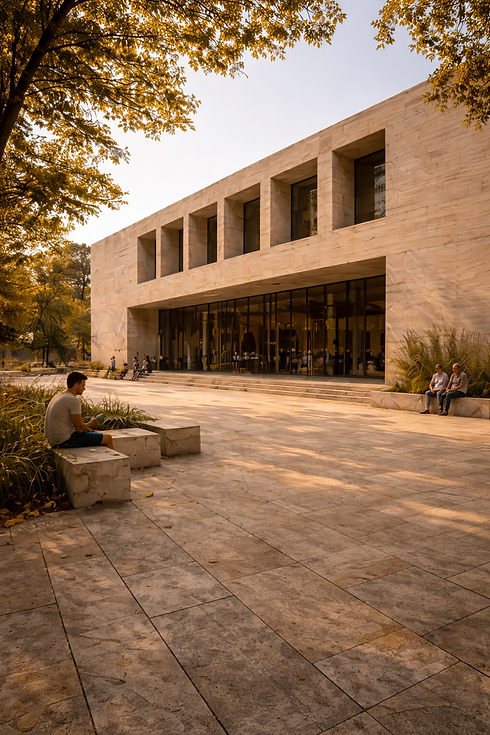
Roman Travertine is frequently used in public architecture such as museums, cultural institutions and urban spaces. Large architectural projects often require materials that combine durability with a strong visual identity, and travertine offers both of these characteristics.
Because of its long historical association with monumental architecture, the use of Roman Travertine in contemporary public buildings also carries symbolic meaning. The material connects modern construction with the architectural traditions of classical Rome while remaining suitable for modern engineering requirements.
In many cases the stone is used for façades, plazas and architectural elements that shape the public perception of a building. Its natural tones and textures help create surfaces that interact with light and surrounding urban environments, giving public spaces a sense of continuity with the long architectural history of Rome.

Landscape Architecture
Travertine is also widely used in landscape architecture and outdoor design. Gardens, terraces, pathways and courtyards often incorporate travertine paving or architectural elements that interact naturally with vegetation and surrounding landscapes.
The stone’s natural texture and warm tones allow it to blend easily with outdoor environments. Travertine surfaces can create smooth transitions between architecture and landscape while maintaining visual continuity between indoor and outdoor spaces.
Because of its durability and ability to withstand environmental exposure, Roman Travertine remains a reliable material for landscape architecture projects that require long-lasting natural surfaces.
Its subtle color variations and mineral patterns also help create outdoor spaces that feel calm, balanced and closely connected with the surrounding natural environment.
Roman Travertine vs Other Natural Stones
Understanding the differences between Roman Travertine and other natural stones helps architects and designers choose the most suitable material for each architectural project. By comparing structure, texture, color variations and geological origin, it becomes easier to understand how travertine differs from materials such as marble or limestone and why it continues to play an important role in both historic and contemporary architecture.


Travertine vs Marble
Travertine and marble are both natural stones widely used in architecture, but they differ significantly in geological origin and visual appearance. Marble is a metamorphic rock formed when limestone is subjected to high temperature and pressure inside the Earth’s crust. This process transforms the mineral structure of the stone and produces a dense crystalline material.
Travertine, by contrast, forms through the precipitation of calcium carbonate from mineral-rich waters at the Earth’s surface. This process creates the characteristic porous structure and layered patterns that define the appearance of the stone.
In architectural applications marble is often associated with polished surfaces and highly reflective finishes, while travertine tends to emphasize natural textures and warmer tonal variations. Because of its surface structure and finishing possibilities, Roman Travertine is frequently chosen for architectural environments where a natural and textured material is preferred.
Travertine vs Limestone
Travertine is technically a type of limestone, but its geological formation gives it distinctive characteristics that differentiate it from many other limestones used in construction. While traditional limestone often forms through sediment accumulation in marine environments, travertine develops through mineral deposition from thermal or mineral-rich waters.
This difference in formation results in visible structural variations. Travertine typically contains natural cavities and layered patterns created during the mineral deposition process, whereas many limestones display more homogeneous internal structures.
In architectural applications travertine is often selected when designers want a material with stronger visual texture and natural tonal variation. Limestone, on the other hand, may be preferred in projects that require smoother and more uniform surfaces.

Why Roman Travertine Stands Out
Roman Travertine holds a distinctive position among natural stones because of its combination of geological origin, architectural history and material performance. Few stones are as closely associated with a specific city and architectural tradition as travertine is with Rome.
The presence of Roman Travertine in monuments such as the Colosseum and numerous historic buildings demonstrates its long-term durability and structural reliability. At the same time, its natural texture and warm tones allow it to adapt easily to contemporary architectural design.
For architects and designers, Roman Travertine offers a material that connects historical heritage with modern construction. Its ability to balance aesthetic character with structural performance explains why it continues to be widely used in both traditional and contemporary architecture.
Roman Travertine FAQ
These frequently asked questions explain the most common doubts about Roman Travertine, its durability, maintenance and architectural use.
Roman Travertine has been used in architecture for centuries, yet many people still have questions about its properties, durability and practical applications. Because it is a natural stone with a unique geological structure, understanding how it behaves in architectural environments can help architects, designers and homeowners make more informed decisions when selecting materials for their projects.
The following questions address some of the most common topics related to Roman Travertine, including durability, outdoor performance and maintenance requirements.
Working with Roman Travertine
For projects that require authentic Roman Travertine, our team works directly with architects, designers and clients to select the most suitable materials, finishes and stone elements.
Roman Travertine Blog
Explore the world of Roman Travertine, the natural stone that has shaped the architectural identity of Rome for centuries.
Our blog offers insights into the history, formation and architectural use of this remarkable material. From traditional craftsmanship to contemporary design, discover how Roman Travertine continues to inspire architects, designers and builders around the world.
Through articles, project examples and technical explanations, we share knowledge about finishes, applications and the unique qualities that make Roman Travertine one of the most recognizable natural stones in architecture.


