
Tivoli Travertine Quarries
The geological origin of Roman Travertine in the Tivoli–Rome basin

The Tivoli travertine quarries represent one of the most important geological sources of Roman Travertine, a material that has shaped architecture for over two thousand years. Located just outside Rome, this area is characterized by unique geological conditions that have allowed the continuous formation of travertine through mineral-rich waters and natural deposition processes.
The relationship between the quarries and the city of Rome is not only geographical but also historical and architectural. From ancient monuments such as the Colosseum to contemporary design projects, the travertine extracted in Tivoli has maintained a consistent identity, both in structure and appearance. Understanding the quarry environment is essential to fully grasp how travertine forms, evolves, and is selected for use in architecture.
Geological Context of the Tivoli Basin

The Tivoli–Rome basin is a unique geological environment where travertine formation has been occurring for thousands of years. This area is characterized by the presence of thermal and mineral-rich waters that emerge from underground systems, carrying dissolved calcium carbonate. When these المياه reach the surface, natural chemical reactions begin, leading to the gradual formation of travertine layers.
The geological stability of this region, combined with continuous mineral supply, has allowed the creation of extensive travertine deposits. These conditions are not easily replicated elsewhere, which is why Roman Travertine is considered a reference material worldwide. The Tivoli basin represents a natural laboratory where geological processes and material formation can be directly observed.
Extraction and Quarrying Process
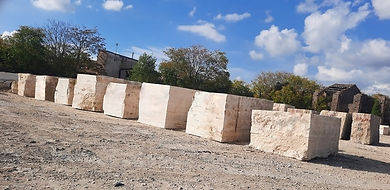
Travertine extraction in the Tivoli area follows a controlled process that respects the natural structure of the stone. Large blocks are cut directly from the quarry using specialized machinery, ensuring that the internal layers and textures remain intact. The orientation of the cut is particularly important, as it determines the visual pattern of the material, such as vein cut or cross cut.
Unlike industrial materials, travertine extraction requires careful selection at every stage. Quarry operators evaluate the density, porosity, and visual characteristics of each block before it is processed further. This selection process is fundamental in maintaining the quality and consistency associated with Roman Travertine.
Material Selection and Quality Variations

Not all travertine blocks extracted from the quarry are identical. Variations in mineral composition, density, and porosity result in different visual and technical characteristics. These differences are evaluated directly at the quarry level, where blocks are categorized according to their suitability for specific applications.
Some materials may be more compact and uniform, while others display a more open and textured structure. These variations are not defects but natural expressions of the formation process. Understanding how to read these differences is essential for architects and designers who want to select the most appropriate material for their projects.
From Quarry to Architectural Material

Once extracted, travertine blocks are transported to processing facilities where they are cut into slabs, tiles, or custom elements. The transformation from raw block to finished product depends on the intended application, with different cutting techniques and finishes applied to enhance specific characteristics of the stone.
This phase connects the geological origin of travertine with its architectural use. The way a block is processed can emphasize its layers, reduce its porosity, or highlight its natural color variations. This versatility is one of the reasons why Roman Travertine continues to be widely used in both traditional and contemporary architecture.
Tivoli Travertine in Roman and Modern Architecture

The travertine extracted from Tivoli has been used in some of the most iconic buildings in Rome, including the Colosseum, where its durability and structural properties were fully exploited. Over time, the same material has been adapted to modern construction techniques, maintaining its relevance in contemporary design.
Today, Tivoli travertine continues to be specified in architectural projects around the world. Its historical significance, combined with its technical performance and aesthetic qualities, makes it a material that connects past and present, geology and architecture.
Travertine Quarry FAQ
1. Where are Roman travertine quarries located?
The main travertine quarries are located in the Tivoli area near Rome, where geological conditions allow continuous formation.
2. Is all travertine from Tivoli the same?
No, natural variations in composition and structure create differences in appearance and performance.
3. How is travertine extracted?
Travertine is extracted in large blocks using specialized cutting techniques that preserve its natural structure.
4. Why is Tivoli travertine important?
It represents one of the most historically and architecturally significant sources of travertine in the world.
From Geological Origin to Built Architecture
The Tivoli travertine quarries are the physical origin of Roman Travertine, linking geological processes to architectural applications. Understanding the quarry environment allows a deeper comprehension of how the material forms, how it varies, and how it is selected for use in design. To complete the picture, it is essential to explore how travertine is formed and how its mineral composition influences its final properties.