
Travertine Mineral Composition
Understanding the mineral structure behind travertine stone performance and appearance

Travertine is primarily composed of calcium carbonate, but the mineral composition of Roman Travertine is far more complex than a simple chemical definition. The internal structure of the stone reflects a long geological process in which mineral-rich water deposits layers of material over time, creating a combination of density, porosity, and natural variation. These characteristics directly influence the stone’s visual identity, from subtle tonal differences to more pronounced textures and patterns.
In addition to its main chemical component, travertine contains traces of other minerals and organic elements that affect both appearance and performance. This makes each block slightly different from another, even within the same quarry area. Understanding the mineral composition of travertine is essential not only from a geological perspective, but also for architectural use, as it determines how the material reacts to cutting, finishing, and environmental exposure. In this section, we explore how composition defines both the nature of the stone and its practical applications.
Calcium Carbonate as the Core of Travertine

Travertine is composed predominantly of calcium carbonate, a mineral that forms through the precipitation of dissolved substances carried by water. As mineral-rich water flows through underground environments and emerges at the surface, chemical reactions occur that cause calcium carbonate to solidify and accumulate in layers. This process creates the foundational structure of the stone.
Although calcium carbonate is the main component, it does not produce a uniform material. The conditions under which the stone forms—such as water flow, temperature and mineral concentration—lead to variations in compactness and texture. These variations are not imperfections, but rather expressions of natural formation, contributing to the identity of travertine as a living geological material.
Secondary Minerals and Natural Variations

In addition to calcium carbonate, travertine contains traces of secondary minerals such as iron oxides and organic residues. These elements are responsible for the wide range of tones found in travertine, from light beige to deeper and warmer shades. The presence and distribution of these minerals vary depending on the geological environment, resulting in unique visual patterns within the stone.
These natural variations are an essential characteristic of travertine. Rather than being considered defects, they are valued for the depth and authenticity they bring to architectural surfaces. The interaction between primary and secondary minerals creates a material that is visually dynamic, with subtle shifts in color and texture that change depending on light and perspective.
Porosity and Internal Structure
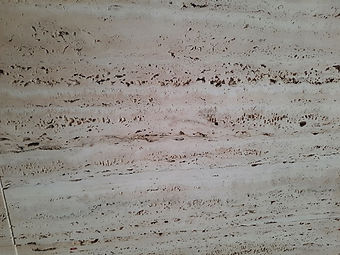
One of the defining features of travertine is its porous structure. These pores are formed during the deposition process, when gases escape from the mineral-rich water and organic materials become trapped and later decompose. The result is a network of cavities within the stone that gives travertine its characteristic texture.
The level of porosity can vary significantly from one type of travertine to another. Some stones display large, visible cavities, while others have a more compact structure with smaller pores. This variation influences both the visual appearance and the technical behavior of the material. In architectural applications, pores may be left open to emphasize the natural character of the stone, or filled to create a smoother and more uniform surface.
Density and Structural Behavior

The density of travertine is directly linked to its mineral composition and the conditions under which it forms. Denser travertine typically has fewer pores and a more compact internal structure, resulting in higher resistance and durability. In contrast, more porous varieties are lighter and easier to work, but may require specific treatments depending on their intended use.
These differences allow travertine to be selected according to the requirements of each project. For example, denser materials are often used in high-traffic areas or structural applications, while lighter, more porous stones may be preferred for decorative surfaces where texture and visual depth are emphasized. Understanding density variations is essential for making informed design and construction decisions.
From Composition to Architectural Performance

The mineral composition of travertine determines how the material performs in real architectural conditions. Properties such as durability, resistance to weathering, and compatibility with different finishes all depend on the internal structure of the stone. A deeper understanding of composition helps explain why travertine behaves differently from other natural stones, even within the broader limestone category.
For architects and designers, this knowledge is fundamental. Choosing the right type of travertine requires not only an evaluation of its appearance, but also an understanding of how its composition will influence long-term performance. This connection between internal structure and practical use is what makes travertine a versatile and enduring material in architecture.
Travertine Composition FAQ
1. What is travertine made of?
Travertine is mainly composed of calcium carbonate, formed through mineral deposition from water over long geological periods.
2. Does mineral composition affect color?
Yes, the presence of secondary minerals such as iron oxides creates variations in color and pattern.
3. Why is travertine porous?
Porosity is caused by gas release and organic material during the formation process, creating cavities within the stone.
4. Is travertine a durable material?
Travertine can be highly durable, especially in denser forms, and is widely used in architecture for both interior and exterior applications.
Understanding the Material from the Inside
The mineral composition of travertine is the key to understanding both its visual identity and its structural behavior. From density and porosity to color variation and durability, every aspect of the material is shaped by its internal structure. This connection between geology and architecture explains why travertine has been used for centuries and continues to play a central role in modern design. To gain a complete understanding of the material, it is essential to explore both its formation process and the quarry environments that influence its final characteristics.